
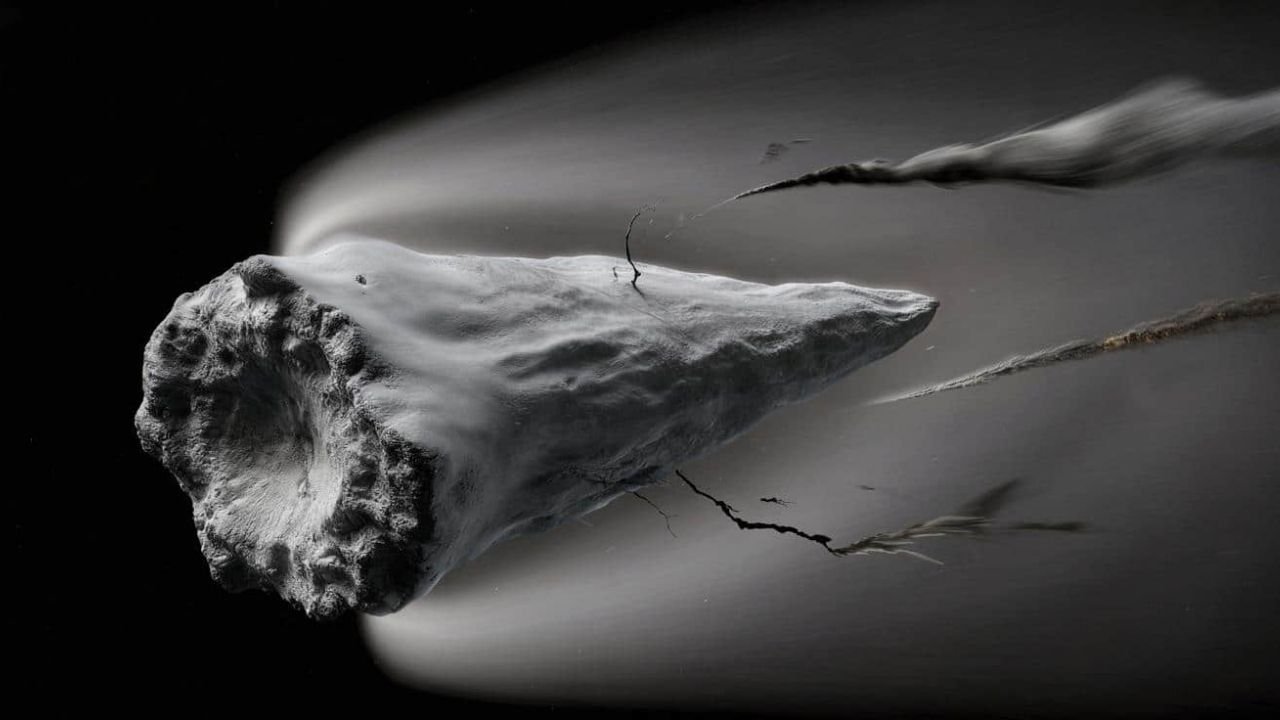
A newly released set of eight spacecraft images has provided scientists and the general public an fantastic view of interstellar comet 3I/ATLAS, revealing info with a level of clarity never before completed for an object born beyond our sun machine. Captured by superior space-primarily based observatories operated in collaboration with NASA and international partners, the pix offer a hauntingly unique have a look at a visitor from another celebrity machine—one which challenges long-held assumptions approximately the nature of interstellar objects.
What Is Interstellar Comet 3I/ATLAS?
Comet 3I/ATLAS is handiest the third confirmed interstellar object ever determined passing through our solar system, following the discovery of ‘Oumuamua in 2017 and 2I/Borisov in 2019. Detected by way of the ATLAS survey, 3I/ATLAS turned into quick diagnosed as interstellar because of its intense speed and hyperbolic trajectory—clean symptoms that it isn’t always gravitationally sure to the Sun.
What makes 3I/ATLAS especially compelling is that it behaves greater like a traditional comet than its predecessors, showing seen outgassing and a structured coma. This lets in scientists to observe pristine material shaped round any other star billions of years ago.
Eight Images That Changed Everything
The newly launched images, taken over multiple commentary windows, capture the comet from various angles and wavelengths. Together, they shape an in depth composite that reveals:
- A sharply defined nucleus
- Complex jets of gas and dust
- Asymmetric outgassing patterns
- Subtle surface irregularities
The clarity is so putting that researchers describe it as both incredible and unsettling—not due to any danger, but due to how vividly alien the object appears. Unlike most solar-gadget comets, 3I/ATLAS shows chemical and structural capabilities that propose it formed beneath very specific stellar situations.
Unprecedented Precision in Observation
These images were made possible with the aid of next-generation imaging sensors, adaptive publicity techniques, and delicate tracking algorithms that allowed spacecraft to lock onto a fast-moving goal with excessive accuracy. For the first time, scientists can analyze an interstellar comet’s activity nearly body by means of body because it responds to solar radiation.
Spectral data embedded within the images suggest uncommon ratios of unstable compounds, such as carbon-based molecules that fluctuate from those normally discovered in native solar-device comets. This helps the idea that planetary structures across the galaxy may additionally evolve in dramatically diverse ways.

Why the Images Feel Unsettling
The unsettling issue of these images lies no longer in danger, however in attitude. Seeing an item that undeniably formed around some other superstar—now rendered in such intimate detail—forces a reevaluation of our place within the cosmos. The images blur the line among the acquainted and the alien, making interstellar area experience suddenly closer and extra tangible.
For astronomers, the discomfort is intellectual: every new element challenges existing comet fashions. For the general public, it’s emotional—an simple reminder that our solar system isn’t isolated, however a part of a enormous, dynamic galactic surroundings.
Scientific Impact and Future Research
The data from 3I/ATLAS will inform research for decades. Scientists hope to:
- Compare its composition with solar-system comets
- Refine models of planetary system formation
- Improve detection and tracking of future interstellar visitors
Upcoming missions and observatories will use lessons learned from these observations to respond even faster when the next interstellar object is detected.
Conclusion
The eight newly released spacecraft images of interstellar comet 3I/ATLAS mark a turning factor in present day astronomy. With exceptional and almost unsettling precision, they rework cosmic wanderer into a detailed clinical difficulty—one that consists of the chemical fingerprints of some other big name device. Beyond their technical brilliance, these images remind us that the universe isn’t always summary or remote. It is active, interconnected, and on occasion sends tangible messengers across the void. In revealing 3I/ATLAS with such marvelous clarity, humanity has taken one greater step in the direction of expertise its location many of the stars.
