
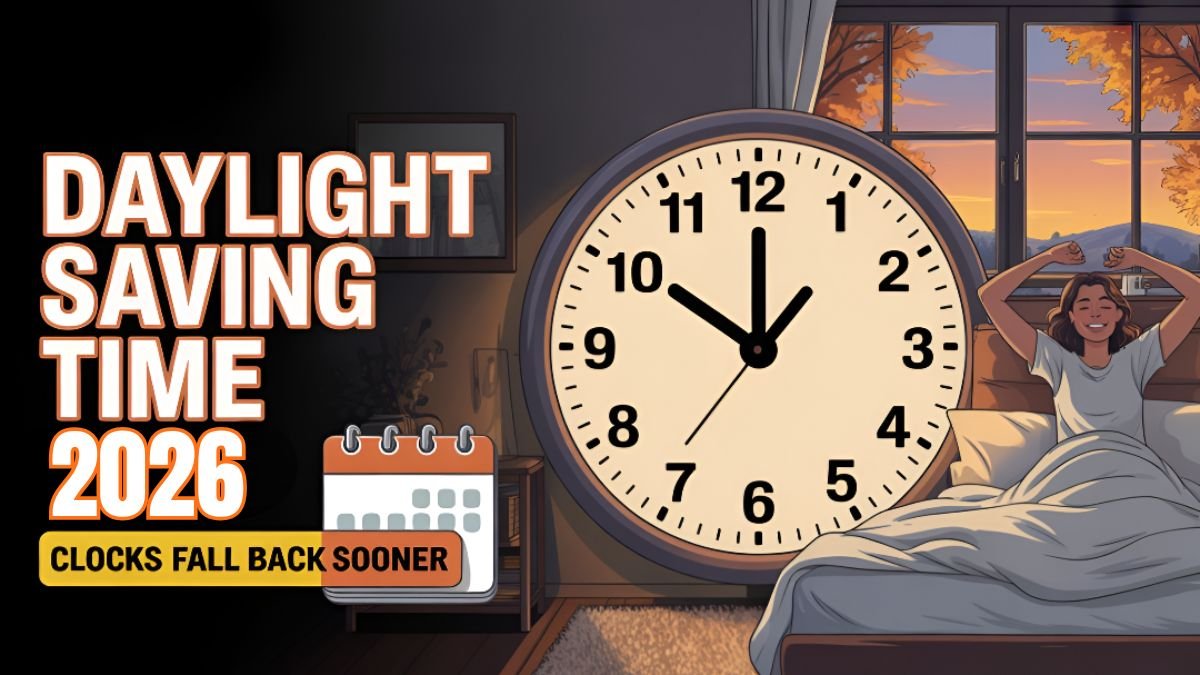
Daylight Saving Time (DST) is a seasonal time change that quietly affects the daily lives of millions of people every year. During the summer months, when days are longer, clocks are advanced by one hour to provide more daylight in the evening. This system ends in the autumn, and clocks return to standard time. This change brings relief to some but can also cause a bit of confusion for others. As 2026 approaches, it’s important to understand when Daylight Saving Time will end, what “fall back” means, and how it might affect your daily routine.
When will Daylight Saving Time end in 2026?
In 2026, Daylight Saving Time will end on Sunday, November 1st. At 2:00 AM local time on that day, clocks will be turned back one hour. This means 2:00 AM will become 1:00 AM again, and we will officially return to standard time. This change will apply to all countries and regions that still observe DST, such as much of the United States, several parts of Canada, and some other parts of the world.
The term “fall back” is used to remind people that the clocks are turned back during this time. The biggest benefit is that people gain an extra hour, which is usually translated into more sleep. This is why this change is considered more comfortable than the “spring forward” change in the spring.

What changes when the clocks are turned back?
After Daylight Saving Time ends, mornings become brighter earlier, but evenings get darker sooner. The earlier daylight in the morning is a welcome change for many, especially those who get up early for work or school. However, the earlier darkness in the evening can make the day feel shorter and can affect energy levels.
Nowadays, most smartphones, computers, and digital devices automatically update the time. However, wall clocks, wristwatches, and car clocks still need to be adjusted manually. Therefore, it’s best to check these clocks the night before the time change to avoid being late for any important tasks or appointments.
Why was Daylight Saving Time introduced?
The main purpose of introducing Daylight Saving Time was to make better use of natural daylight. During the summer months, the days are longer, and setting the clocks forward allows people to take advantage of more daylight in the evenings. Historically, this system was adopted, particularly during wartime and energy crises, to conserve fuel and electricity.
While the energy-saving benefits are debated today, the tradition continues in many countries. Many people appreciate the longer evenings, as they provide more time for outdoor activities, sports, and social gatherings. However, some countries have completely abolished DST and now follow a single time system throughout the year.
Which regions will observe Daylight Saving Time in 2026?
In 2026, Daylight Saving Time will be observed in the following regions:
- Most of the United States
- Most provinces of Canada
- Several European countries
- Parts of Australia, New Zealand, and South America
There are also some places where DST is not observed. In the US, Arizona (except for the Navajo Nation) and Hawaii remain on standard time all year round. Similarly, many countries near the equator do not experience significant differences in day and night length, so DST is not considered necessary there. If you are planning to travel during this period, it would be wise to check the local time regulations in advance.
The Impact of Time Change on Body and Mind
The end of Daylight Saving Time is generally considered easier on the body than the spring transition, as it provides an extra hour of sleep. However, the shift in daylight hours can still slightly affect our body’s internal clock, or circadian rhythm. This internal clock dictates when we feel sleepy and when we feel alert.
Some people may experience lethargy, difficulty concentrating, or mild fatigue for a few days after the change. This is often referred to as “mini jet lag.” During this time, it’s crucial to listen to your body’s signals and prioritize rest.

How to Prepare for the Time Change in 2026
Several simple steps can be taken to ease the transition when the clocks go back. Making slight adjustments to your sleep and wake times a few days before the change can be helpful. Spend as much time as possible in natural daylight during the day to help your body adjust to the new schedule. Reducing caffeine and screen time in the evenings is also beneficial.
Additionally, remember to double-check all manual clocks and alarms. Parents should pay close attention to their children’s routines, as children may take a little longer to adjust to the change. A calm and consistent bedtime routine is beneficial for both children and adults.
Could Daylight Saving Time End in the Future?
For the past few years, there has been discussion in several countries about completely eliminating Daylight Saving Time. Several proposals have been put forward in the US and Europe on this topic, but no final decision has been made for 2026. Until the law changes, the current system will remain in place, and clocks will continue to be adjusted forward and backward at the designated times.
The main point of contention in this debate is whether permanent Standard Time or permanent Daylight Saving Time is preferable. Many health experts believe that standard time is more aligned with the body’s natural cycles.
Final Thoughts
Daylight Saving Time 2026 will end on Sunday, November 1st, when clocks will be set back one hour at 2:00 AM. While this change may seem small, its effects on our daily routines, sleep patterns, and energy levels are noticeable. With a little preparation and timely adjustments, this transition can be quite smooth.
This time change, coinciding with the arrival of autumn, serves as a reminder to slow down, get more rest, and prepare for the winter months ahead. With proper planning and a little mindfulness, you can make the most of this extra hour and embrace this seasonal shift in a positive way.
FAQs
Q. When does Daylight Saving Time end in 2026?
A. Daylight Saving Time ends on Sunday, November 1, 2026, when clocks are set back one hour at 2:00 a.m.
Q. Do we gain or lose an hour when clocks fall back?
A. You gain one extra hour of sleep when clocks fall back in autumn.
Q. Will my phone and computer change the time automatically?
A. Yes, most smartphones, computers, and smart devices update the time automatically.
Q. Which countries observe Daylight Saving Time in 2026?
A. Most of the United States, Canada, parts of Europe, and some regions in Australia and South America observe DST.
Q. Why does Daylight Saving Time still exist?
A. It was introduced to make better use of daylight and is still used in many regions for lifestyle and policy reasons.
