
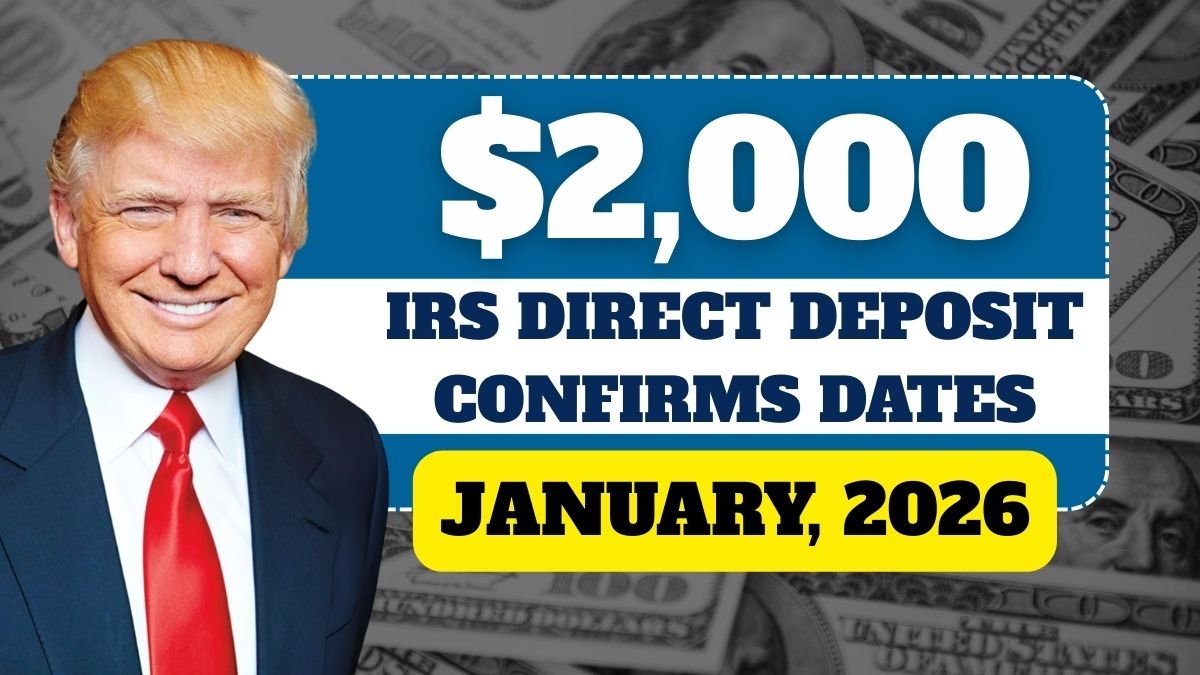
The IRS’s announcement of a $2,000 direct deposit in January 2026 has become one of the biggest financial news stories of the year. It provides timely relief for millions of American families struggling with rising inflation, increased rents, and winter utility bills. This is a one-time payment, and most eligible individuals will not need to fill out any additional forms. It’s not like a typical tax refund; its purpose is to provide immediate financial assistance.
What is the $2,000 IRS January 2026 Payment?
This $2,000 payment approved by the IRS is a standalone federal relief deposit. It is not tied to any future tax refunds and does not need to be repaid later. Its purpose is to help families who are under financial pressure due to the rising cost of living.
The biggest advantage of this payment is that it’s being distributed quickly. The IRS is using existing tax records instead of requiring new applications. Those who already use direct deposit may receive the funds even faster.
Eligibility for the $2,000 Direct Deposit
Eligibility for the January 2026 payment primarily depends on income and tax filing status. The IRS will initially review 2024 filings and, in some cases, will also use updated information from 2025.
- Single Filers: Annual income of $75,000 or less
- Married Filing Jointly: Annual income of $150,000 or less
If income is slightly above these limits, the payment may be reduced. Those with higher incomes will not be eligible for this payment.
When will the IRS send the $2,000 payment?
The IRS plans to release the payments in phases to avoid overwhelming the system and causing processing delays. Direct deposit is the primary method because it is faster and more secure. January 2026 Payment Schedule:
| Payment Phase | Expected Dates | Delivery Method |
|---|---|---|
| First Wave | Jan 6 – Jan 12, 2026 | Direct Deposit |
| Second Wave | Jan 16 – Jan 20, 2026 | Direct Deposit |
| Final Digital Deposits | Jan 22 – Jan 24, 2026 | Direct Deposit |
| Paper Check | Jan 27 – Jan 31, 2026 | By Mail |
Note that due to banking processing, some individuals may experience delays in payment posting. Paper checks typically arrive a little later and may be received in some households in early February.
What to Do to Ensure Payment
For most taxpayers, no additional action is required. If you filed your 2024 tax return and your banking information is up-to-date, the IRS will automatically send the payment.
However, please note the following:
- Bank account details must be active in IRS records.
- Update your mailing address if you have recently moved.
- Name and Social Security Number must match IRS records.
- Those who don’t typically file taxes should use the IRS Non-Filers Tool.
These small steps can prevent weeks of unnecessary delays.
Information for Non-Filers and Low-Income Families
Even if you don’t typically file taxes because your income is too low, you may still be eligible for the $2,000 payment. The IRS needs your information. Non-filers must submit their basic personal and banking information so the money can be sent to the correct place.
This step is especially important for senior citizens, gig workers, and those receiving federal benefits who are not required to file taxes.
The Importance of This Payment
January is often the most expensive month for households. Heating bills, post-holiday expenses, and rent all combine to strain family budgets. In this situation, a one-time payment of $2,000 provides real relief.
This payment is not a long-term solution, but it is crucial for providing breathing room and flexibility. Always rely on official IRS updates, as instances of fraud and misinformation increase during high-profile payment announcements.
Conclusion
The $2,000 IRS direct deposit in January 2026 is a welcome relief for millions of Americans. By ensuring your eligibility, updating your schedule, and keeping your information current, you can receive your payments promptly.
This is a time not only to receive financial assistance but also to take responsibility for keeping your tax records and banking details up to date. This way, you can ensure financial security and relief for your family in January 2026.
FAQs
Q. Who is eligible for the $2,000 IRS payment?
A. Individuals earning up to $75,000 and married couples earning up to $150,000, based on their most recent tax return.
Q. Is this $2,000 payment a loan or tax refund?
A. No, it is a one-time relief payment and does not need to be repaid.
Q. How will I receive the payment?
A. Primarily via direct deposit; if no bank details are on file, a paper check will be mailed.
Q. When will the payment be sent?
A. Payments are scheduled in waves between January 6 and January 31, 2026.
Q. Do non-filers qualify for the payment?
A. Yes, but non-filers must submit basic personal and banking information using the IRS non-filer tool.
